
 Skip to content
 The best way to pack for a move is to declutter first, pack rarely used belongings early, use smaller boxes for heavy items and larger boxes for lightweight items, protect fragile belongings so they cannot shift, and label every box by destination room and contents. Pack everyday essentials last, and keep medications, documents, keys, chargers, toiletries, and first-night necessities with you instead of loading them onto the moving truck.
Ace Moving Co. crews see packing from the other side of the box. A carton does not just need to hold your belongings—it needs to be lifted, carried through the home, stacked with other boxes, transported, unloaded, and placed in the correct room.
For most household moves, starting about 4–6 weeks before moving day gives you enough time to declutter, gather supplies, and pack in stages. Larger homes, long-distance relocations, major downsizing, or limited free time may justify starting 6–8 weeks ahead.
| Time Before Moving Day | What to Focus On |
|---|---|
| 6–8 weeks | Declutter, donate or discard unwanted items, estimate supplies, and identify belongings that need special handling. |
| 4–6 weeks | Pack storage areas, décor, books, seasonal belongings, guest rooms, and other rarely used items. |
| 2–3 weeks | Pack closets, most bedrooms, nonessential kitchen items, and the majority of everyday household contents. |
| Final week | Finish the kitchen, bathrooms, daily clothing, electronics, and other frequently used belongings. |
| Moving day | Keep medications, documents, keys, chargers, toiletries, valuables, and your open-first essentials with you. |
Packing time varies by home size, inventory, decluttering, and how much help you have. If you want a separate time estimate, see our guide to how long movers take to pack a home .
Start with belongings you can comfortably live without until after moving day. Save frequently used rooms and daily necessities for later.
Seasonal belongings, décor, extra linens, and rarely used items.
Guest-room contents, books, artwork, collectibles, and decorations.
Out-of-season clothing and nonessential everyday belongings.
Kitchen basics, toiletries, medications, chargers, and clothing stay available.
Don't start with the hardest room just because it looks the messiest. Start with belongings you will not need again before the move so you are less likely to reopen finished boxes.
Sources: U-Haul packing guide and National Van Lines.
You do not need every specialty packing product on the shelf, but having the right basic supplies before you start prevents repeated shopping trips and half-finished rooms.
Use a mix of small, medium, large, and specialty cartons based on the weight and shape of your belongings.
Use quality tape for box seams and permanent markers or labels for destination rooms and contents.
Packing paper, cushioning, stretch wrap, and furniture protection can be used where the belongings require them.
Before buying supplies, it helps to estimate both quantity and cost. See how many moving boxes you may need and our current guide to how much moving boxes cost.
A box that looks fine sitting on the floor may behave differently after it is lifted, carried, stacked in a truck, transported, and unloaded. Good packing starts by matching the carton to the weight and shape of what goes inside.
Dense belongings belong in smaller boxes. Lightweight, bulky belongings can go in larger cartons. Fill empty space so contents cannot shift, but avoid making boxes unnecessarily heavy.
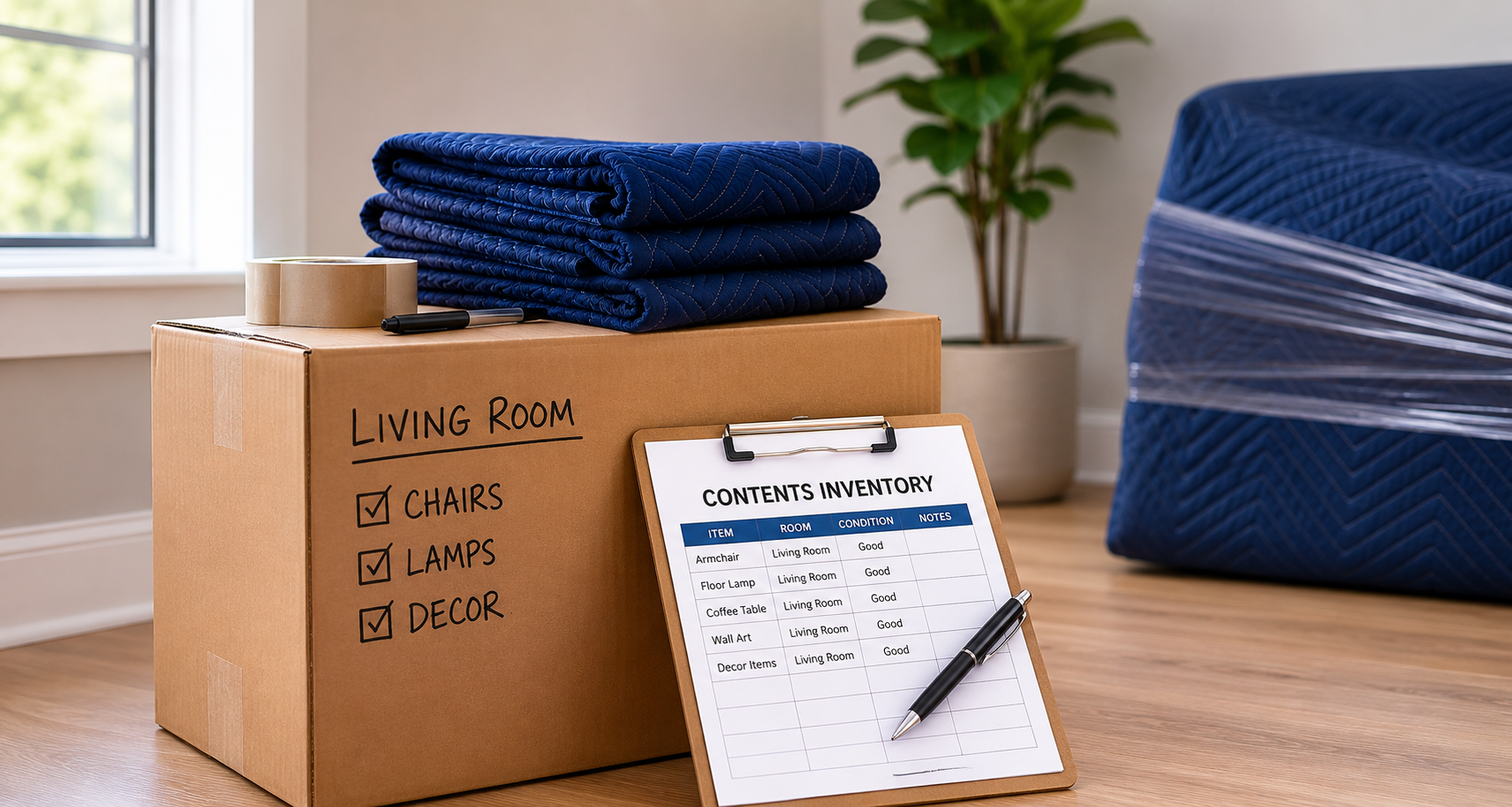
| Belongings | Recommended Box | Why |
|---|---|---|
| Books, tools & dense items | Small | Keeps heavy loads more manageable. |
| Dishes & kitchenware | Small / Medium | Better weight control and room for protection. |
| General household items | Medium | Versatile for ordinary belongings. |
| Clothing | Medium / Large | Uses volume without excessive weight. |
| Bedding & pillows | Large / XL | Bulky but relatively lightweight. |
Secure bottom seams before adding weight.
Use packing material so contents cannot move freely.
Fully closed cartons are easier to organize and stack.
Avoid oversized dense loads that are difficult to carry.
Wrap pieces individually and prevent contact between fragile items.
Identify the destination room and contents immediately.
Use destination room + contents + handling note when necessary. Example: KITCHEN — GLASSWARE — FRAGILE.
Don't put the only label on the top. Once cartons are stacked, that label can disappear from view. Put the room name on the top and at least one visible side.
For a deeper system, see Ace Moving Co.'s contents inventory and box labeling guide.
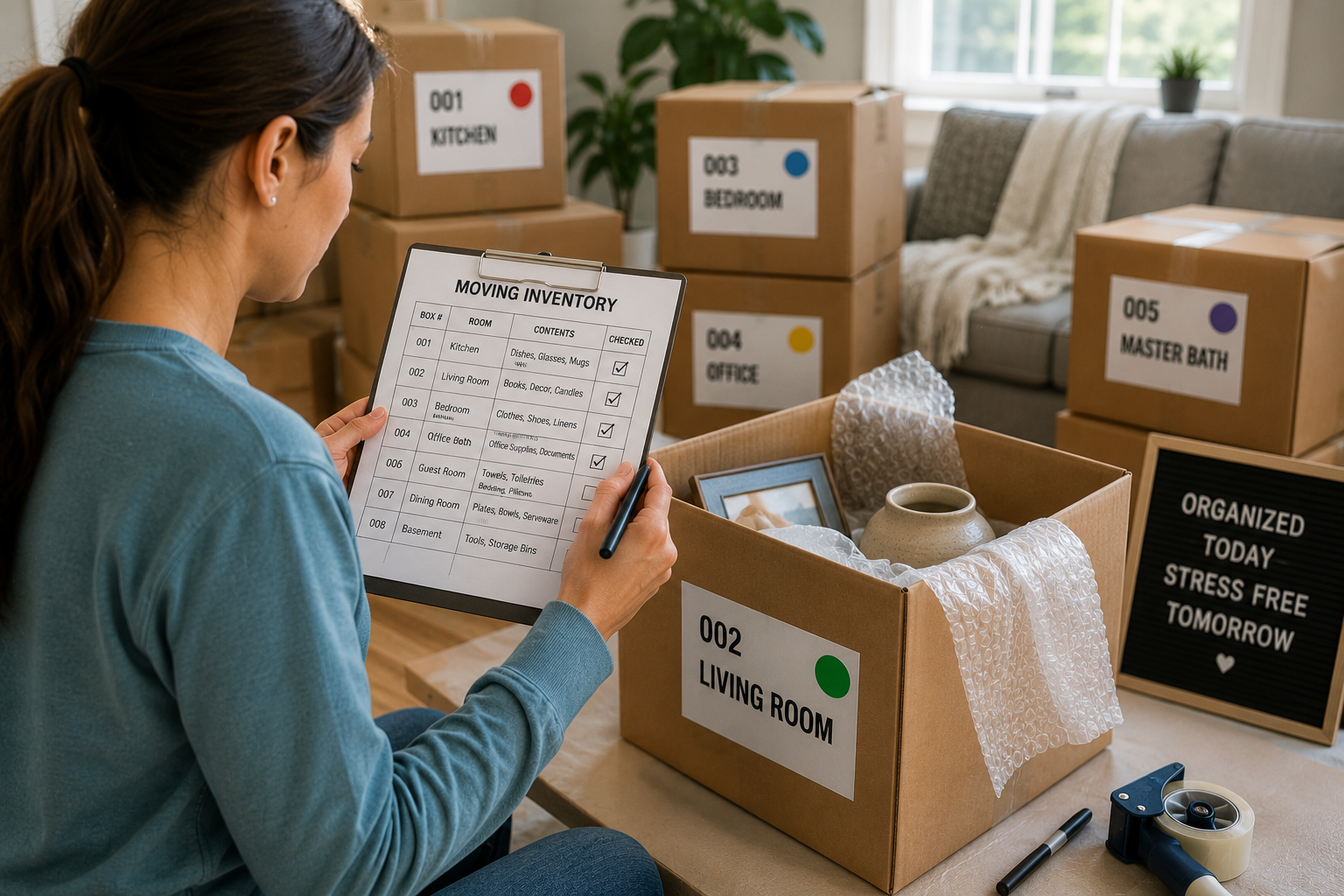
Room-by-room packing keeps related belongings together and makes destination placement easier. The goal is to make each carton easy to identify when it comes off the truck.
Pack specialty cookware first. Use smaller cartons for dishes and dense cookware.
Start with out-of-season clothing and extra bedding. Wardrobe cartons can help selected garments stay hanging.
Pack books and décor early. Keep cables and remotes associated with their electronics.
Pack backups first. Keep medications and daily toiletries accessible.
Sort before packing and ask your mover about restricted or prohibited materials.
Organize equipment, but keep IDs, financial records, and irreplaceable paperwork with you.
Use a repeatable process: cushion → wrap → separate → fill voids → test for movement → seal.
Source: Move.org professional packing tips.
Long-distance packing benefits from more consistency because belongings may remain loaded longer and may involve more handling than a short local move.
For California relocations, see Ace Moving Co.'s California long-distance moving services. If professional help would be useful for all or part of the job, review our packing services as well.
The final test of packing is what happens when the crew starts lifting and loading. These problems can make boxes harder to handle, organize, and place efficiently.
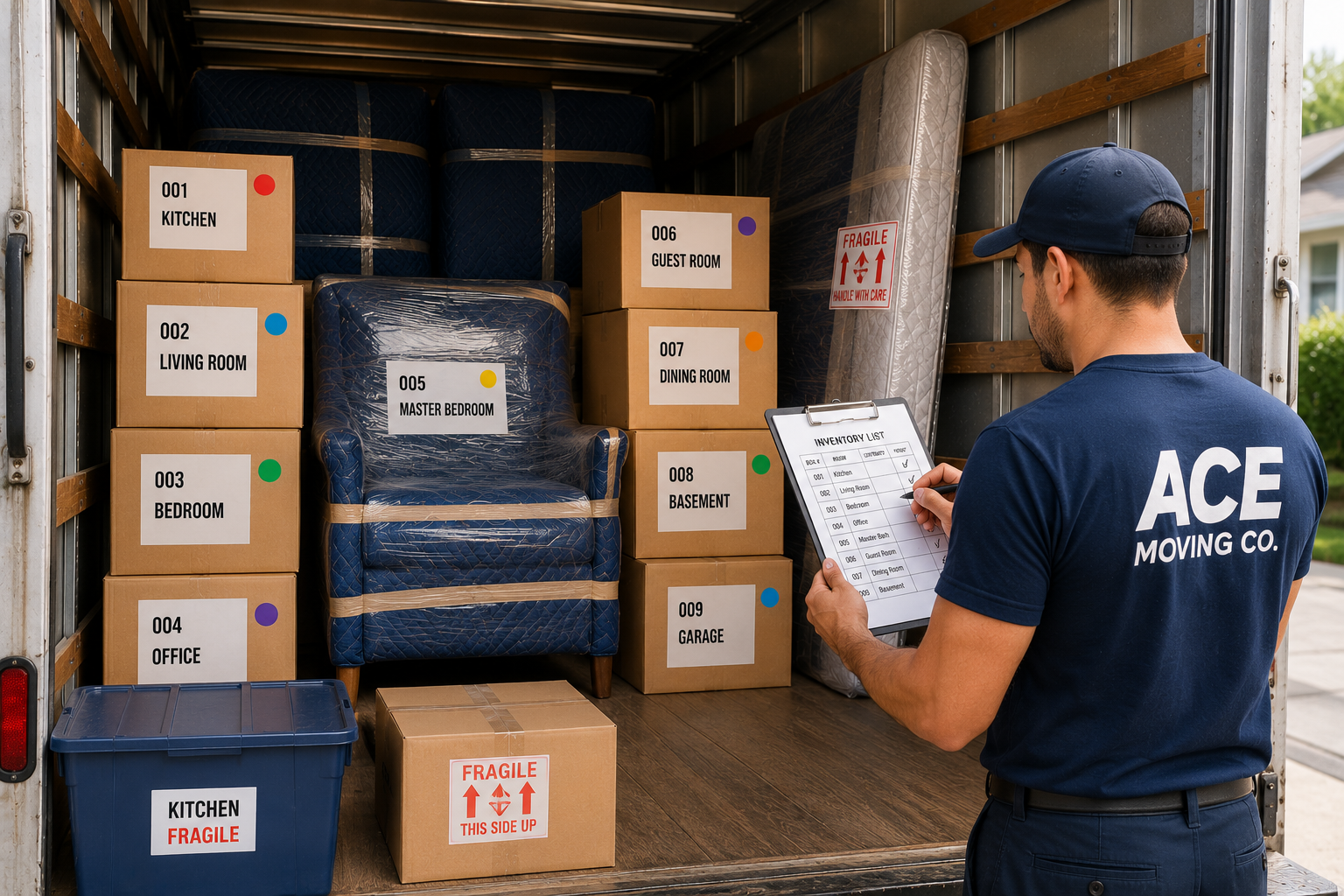
Dense items can turn an oversized carton into a difficult load.
Contents can shift and cartons may lose shape when stacked.
Objects sticking out make secure stacking more difficult.
No destination-room label means extra decisions during unloading.
Every loose object creates another handling and placement decision.
Weak, damp, or crushed boxes are poor choices for heavier belongings.
Customers often have to reopen completed cartons.
Open boxes and loose belongings can interfere with organized loading.
Some belongings are better kept with you, while other items may be restricted or prohibited from a moving shipment. Keep immediate necessities and irreplaceable small items in your personal possession.
Prescription medications, identification, passports, keys, wallets, important legal and financial documents, phones, chargers, jewelry, small valuables, pet necessities, and first-night essentials.
Paints, fuels, propane, chemicals, aerosols, certain batteries, and other hazardous or restricted materials may not be accepted in a household-goods shipment.
For California-specific guidance, see our article on what movers are not allowed to pack or move in California.
Set aside one clearly labeled carton or bag with the basics you are likely to need immediately after arriving. Transport it with you or arrange for it to be one of the first items available at delivery.
DIY packing can work when you have time and ordinary household belongings. Partial packing can make sense when you want professional help with kitchens, artwork, fragile items, or difficult rooms. Full packing can be useful when time is limited, the household is large, or you want packing and moving coordinated together.
See Ace Moving Co.'s professional packing services for additional options.
Most households benefit from starting about 4–6 weeks before moving day, while larger homes, long-distance moves, or major decluttering may justify starting 6–8 weeks ahead.
Most moves require a mix of boxes, packing tape, labels or markers, packing paper or cushioning for fragile items, and protective materials appropriate for furniture or specialty belongings.
Declutter first and begin with belongings you rarely use. Work toward everyday rooms and leave daily essentials until the final days.
Seasonal belongings, décor, books, storage items, guest-room contents, and out-of-season clothing are good places to start.
Match box size to item weight, secure the carton, cushion fragile belongings, eliminate empty space, close the top completely, and label the destination room.
Work room by room using one packing station, label boxes immediately, and stage completed cartons without blocking walkways.
Generally no. Dense belongings such as books and tools are usually easier to handle in smaller cartons.
Keep medications, toiletries, daily clothing, chargers, basic kitchen necessities, and first-night essentials available until near moving day.
Ace Moving Co. offers partial and full packing support for local and long-distance moves.