 Skip to content
Moving Organization & Item Protection
Moving boxes are easy to stack at the beginning of a project, but once dozens of belongings are packed into trucks, storage units, temporary containers, or restoration staging areas, organization becomes much more important than many homeowners expect.
A contents inventory system helps track what was packed, where items belong, and how belongings are organized throughout transportation, storage, unpacking, or restoration-related work. Whether someone is planning a local move, preparing for a long-distance relocation, placing items into storage, or coordinating cleanup after water or fire damage, clear box labeling can help reduce confusion, misplaced belongings, and unnecessary stress.
The risk is not just theoretical. A 2026 moving survey reported that chargers, clothing, and furniture screws were among the most commonly lost items during moves, and 14% of respondents spent more than £150 replacing lost belongings after relocating. Source
For larger homes, long-distance moves, office transitions, storage projects, or restoration packouts, inventory organization becomes even more important because belongings may move through multiple rooms, trucks, storage locations, or staging areas before they are finally unpacked or returned.
Why Inventory Tracking Matters Beyond Traditional Moving
Many people associate inventory systems only with moving trucks, but organized contents tracking is also important during restoration, renovation, and storage projects. This is especially true when belongings need to be temporarily removed from affected rooms so contractors can access damaged flooring, drywall, cabinetry, insulation, or structural materials.
For homeowners dealing with cleanup or repair work, organized documentation can also support the restoration packout and storage process, especially when belongings are packed, moved, cleaned, staged, or temporarily stored before being returned.
Lost Items, Claims & Delivery Confusion
Poor Labeling Can Create Real Logistical Problems
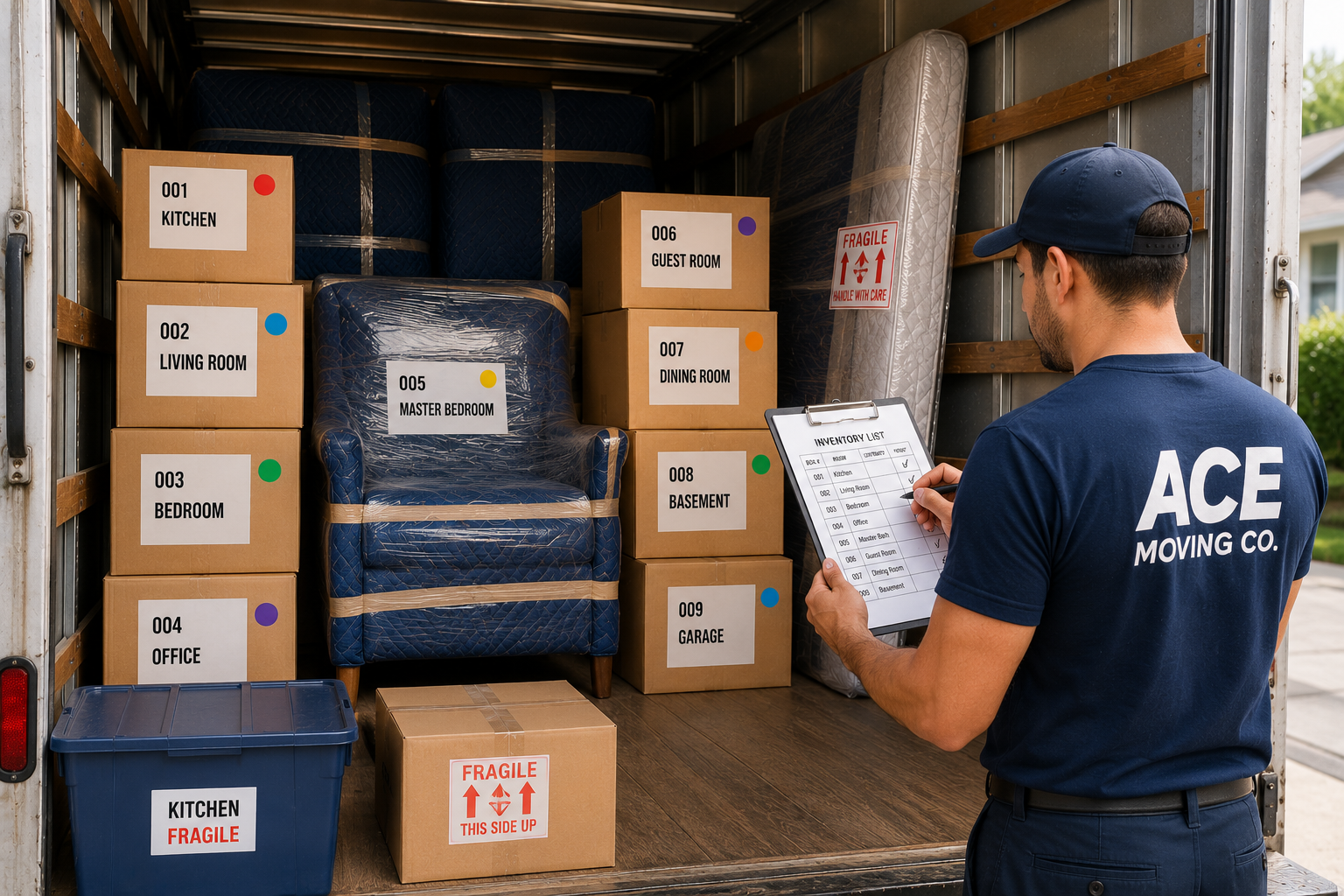
Inventory organization is not only about convenience after unpacking. Poor labeling can create problems throughout packing, transportation, delivery, storage, and claims documentation. Boxes labeled only as “miscellaneous,” “bedroom,” or “garage stuff” often become difficult to sort once they are stacked with dozens of similar containers.
The Federal Motor Carrier Safety Administration advises consumers to check inventory documents carefully and notes that missing or damaged items at delivery should be documented through the claims process. FMCSA also states that written claims for lost or damaged goods must generally be filed within 9 months of delivery. Source
Misplaced Boxes
Unclear labels make it harder to confirm which boxes belong in each room or storage area.
Lost Hardware
Furniture screws, brackets, cords, remotes, and small parts are easy to misplace without a labeled parts box.
Slower Unpacking
Vague labeling forces homeowners to reopen multiple boxes just to find daily-use items.
Claims Confusion
Detailed inventory notes can help clarify what was packed, moved, stored, or delivered.
The Box Count Adds Up Quickly
Packing volume is another reason inventory systems matter. Extra Space Storage estimates that a three-bedroom house typically requires about 45 to 70 moving boxes, depending on household size and how much the customer owns. Source
A Simple Contents Inventory System That Works
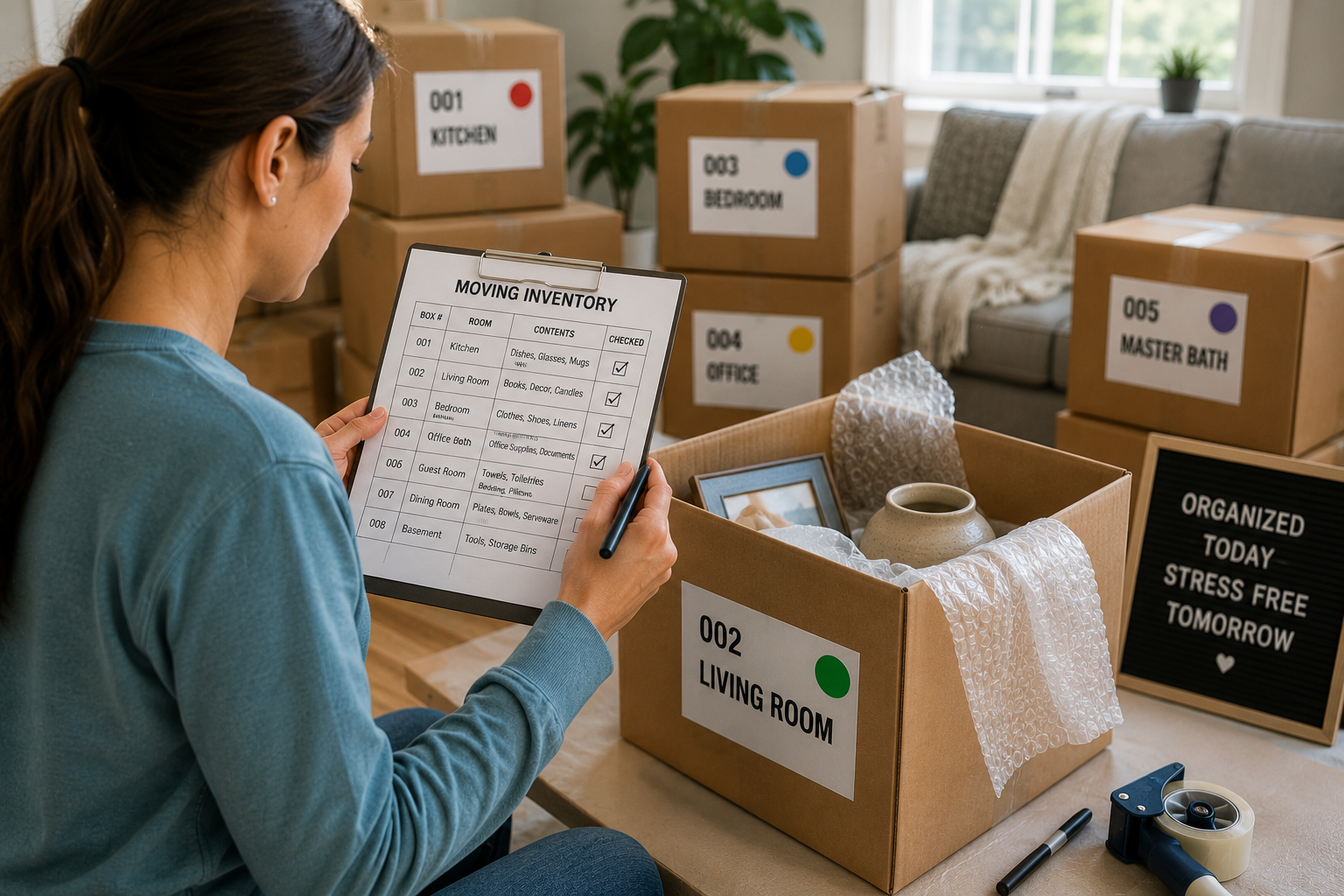
Inventory systems do not need to be complicated. A consistent room-by-room structure can make packing, unloading, storage, and restoration return delivery much easier to manage.
1. Room Destination
Label each box by room, such as kitchen, office, primary bedroom, garage, storage, or living room.
2. Box Number
Use labels like “Kitchen Box 1 of 10” or “Office Box 2 of 7” so missing boxes are easier to identify.
3. Short Contents
Use simple descriptions like baking supplies, desk cables, bathroom towels, or cleaning supplies.
4. Priority Label
Add clear notes such as fragile, open first, daily use, storage, or important documents.
Customers who want help organizing boxes before moving day can also benefit from professional packing services, especially for fragile items, room-by-room packing, furniture protection, and long-distance preparation.
Storage & Long-Term Organization
Inventory Systems Become Even More Important During Storage Projects
Storage situations often create the highest level of inventory confusion because belongings may remain packed for weeks or months before reopening. This becomes especially difficult during home renovations, delayed closings, restoration projects, temporary housing transitions, or long-distance relocations involving multiple delivery stages.
Without organized labeling systems, storage units can quickly become difficult to navigate. Homeowners often end up reopening dozens of boxes searching for chargers, seasonal clothing, hardware, paperwork, kitchen supplies, or important personal items that were packed months earlier.
Structured contents inventories help reduce that confusion by organizing boxes room-by-room while also separating immediate-use belongings from long-term storage items. Inventory organization becomes even more important during restoration-related projects where furniture, electronics, rugs, artwork, and boxed belongings may be temporarily removed while cleanup or reconstruction work is completed.
Homeowners coordinating restoration-related moving and storage projects can also benefit from organized documentation during the restoration packout and storage process , especially when belongings are temporarily packed, cleaned, staged, or relocated into storage during mitigation work.
Temporary Housing
Inventory systems help separate daily-use belongings from long-term packed storage items.
Restoration Projects
Organized tracking helps homeowners monitor belongings moved during cleanup or reconstruction.
Long-Distance Moves
Multi-day relocations often involve more boxes, staging, and delivery coordination.
Storage Transitions
Clear labeling helps reduce time spent reopening boxes months later.
Helpful Labeling Tips Before Packing Begins
Inventory systems do not need to be overly complicated to be effective. In many situations, a consistent room-by-room structure creates enough organization to dramatically simplify unpacking, storage management, and transportation coordination.
Professional movers often recommend labeling multiple sides of each box, grouping belongings by room, separating storage items from immediate-use belongings, and creating simple numbering systems to reduce confusion after delivery.
Label Multiple Sides
Labels should appear on the top and at least two sides of each box so they remain visible while stacked.
Separate Priority Items
Keep medications, chargers, important documents, and valuables accessible instead of packed deep inside trucks or storage units.
Use Room Categories
Consistent room-by-room organization helps movers and homeowners place boxes correctly during unloading.
Photograph Electronics
Quick phone photos before disconnecting electronics can simplify setup and reassembly later.
Why Organized Inventory Systems Matter
A contents inventory system may seem unnecessary during the early stages of packing, but organized labeling often becomes one of the most valuable parts of the entire moving, storage, or restoration process.
Clear inventory tracking helps reduce confusion, simplify unpacking, improve storage organization, and make it easier to locate belongings after they have been transported, temporarily relocated, or staged during restoration work.
Whether preparing for a local move, long-distance relocation, temporary storage transition, or restoration-related project, organized box labeling and contents inventory management can help make the process significantly easier to manage.