
 Skip to content
 Flat-rate moving in California can give you a fixed amount for the services described in your written estimate, but the way a move is calculated still depends on distance, shipment size, and California moving rules. For household moves over 100 miles within California, state rules use distance-based rates tied to shipment weight and mileage; for moves of 100 miles or less, hourly or applicable distance rates may be used.
California allows a mover and customer to agree that a written estimate will be both the minimum and maximum amount due for the services described. When that fixed estimate is properly documented, the customer has greater price certainty—but added items or services can still change the total through a written Change Order.
These terms are often used interchangeably in advertising, but they describe different parts of the pricing process. A flat price describes what you ultimately agree to pay for the listed scope; hourly and weight-and-distance pricing describe the units that may be used to calculate the underlying move.
| Pricing Method | How It Works | Where It Commonly Fits | Main Advantage |
|---|---|---|---|
| Flat / Fixed Estimate | Written amount is agreed to as both the minimum and maximum for the described services | Moves with a well-defined inventory, access and service scope | High price predictability |
| Hourly | Transportation and labor are calculated using time-based rates | California moves of 100 miles or less | Can work well for smaller or straightforward local moves |
| Weight + Distance | Transportation charge is based on shipment weight and mileage | California intrastate moves over 100 miles | Price is tied closely to shipment size and route distance |
| Not-to-Exceed | Written maximum amount that may be charged for the listed services | California household moves | Protects the customer from an open-ended final bill |
California rule sources: Bureau of Household Goods and Services consumer guidance and California Maximum Rate Tariff 4, effective January 1, 2026 .
A fixed moving price works best when the mover can clearly define what is being transported and what services will be required before moving day. That is why a detailed inventory, accurate access information, and a clear list of packing or specialty services matter so much.
California's tariff specifically allows the mover and shipper to agree that the estimated amount will be both the minimum and maximum amount due for the services described in the estimate. The agreement must be documented in the estimate and moving agreement.
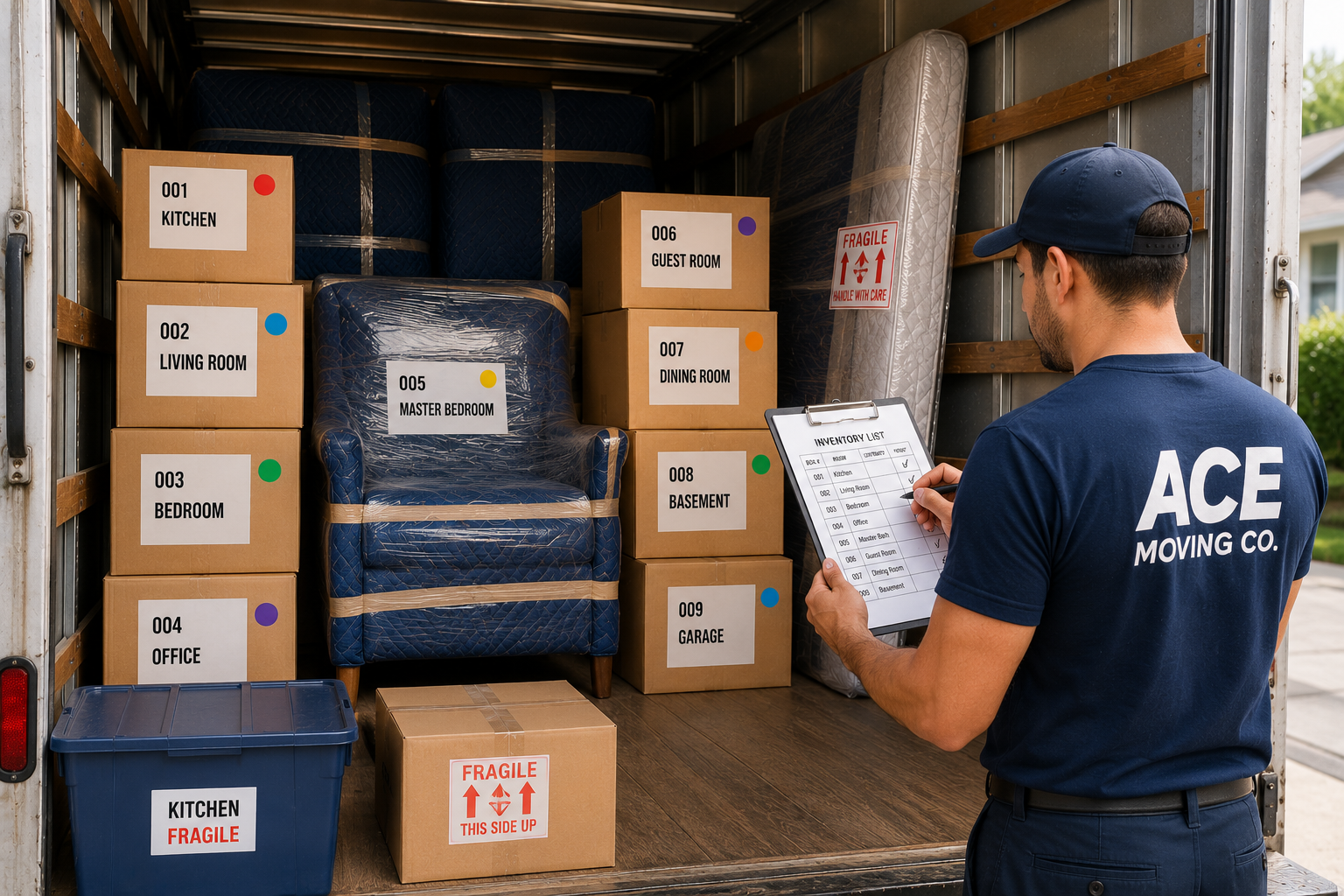
Furniture, boxes, appliances, specialty items, and other belongings are identified before the estimate is finalized.
Stairs, elevators, parking, long carries, building rules, and loading conditions are accounted for in advance.
Packing, unpacking, storage, specialty handling, and other requested services are clearly listed.
Origin, destination, mileage, pickup timing, and delivery expectations are established before the move.
Not simply because the mover underestimated the original work. California allows a Change Order when the customer adds articles or requests additional services that were not included in the original agreement. Those additions should be documented before the extra services are performed.
California explains that a Change Order cannot be used simply because a mover underestimated the original cost. See BHGS household mover guidance .
Under California's 2026 tariff, a household move of more than 100 miles within the state is considered a long-distance move for rating purposes and uses distance rates. Those rates are expressed in dollars per 100 pounds and vary by mileage and shipment-weight bracket.
That means the amount of property you move matters. A lightly furnished one-bedroom apartment and a fully furnished four-bedroom home can travel the same route but produce very different transportation costs.
For customers starting in Oakland or elsewhere in the Bay Area, Ace Moving Co.'s California long-distance moving services cover intrastate relocations throughout Northern, Central, and Southern California.
The tariff's 350–375 mile bracket lists a maximum fixed distance rate of $77.77 per 100 pounds at the 5,000-pound breakpoint. A simple 5,000-pound calculation produces a transportation-rate example of about $3,888.50 before other applicable services or charges.
| Illustrative Tariff Example | Figure Used | Calculation | Result |
|---|---|---|---|
| Distance | 350–375 miles | California Item 310 bracket | Long-distance rate applies |
| Shipment weight | 5,000 lb. | 50 × 100 lb. | 50 rate units |
| Rate | $77.77 / 100 lb. | 50 × $77.77 | $3,888.50 |
| This is an illustration of California's maximum tariff mechanics—not an Ace Moving Co. quote or a prediction of what your move will cost. | |||
Tariff source: California Maximum Rate Tariff 4 — Item 310 .
Market pricing gives another useful perspective. Published August 2026 data for the roughly 371-mile Oakland-to-Los-Angeles route shows full-service moving ranges that vary significantly by home size.
| Home Size | Published Full-Service Planning Range | What Changes the Final Price |
|---|---|---|
| Studio / 1 Bedroom | $1,258–$4,173 | Inventory size, packing, access and service level |
| 2–3 Bedrooms | $1,865–$5,555 | Shipment size, mileage, packing and handling requirements |
| 4+ Bedrooms | $2,961–$7,748 | Larger inventory, more labor and additional services |
Market planning data: moveBuddha Oakland-to-Los-Angeles 2026 cost data . These are independent market benchmarks, not Ace Moving Co. prices or quotes.
Planning that route? See our Oakland to Los Angeles movers page for route-specific moving information.
Neither pricing approach is automatically cheaper for every move. The better question is which structure gives you the clearest and most predictable price for the inventory, distance, access conditions, and services your move actually requires.
Often makes sense when the inventory, addresses, access, packing requirements, and move scope are unlikely to change.
California's required distance-rate framework for moves over 100 miles ties transportation pricing to shipment weight and mileage.
Often works well when the move is 100 miles or less and labor time is the primary cost driver.
This article focuses primarily on moves that begin and end within California. Once a shipment crosses a state line, federal interstate-moving rules apply instead. California residents moving out of state should make sure they understand whether an interstate estimate is binding or non-binding and what services are included.
Customers moving from Oakland can also review Ace Moving Co.'s Oakland long-distance moving services for California and interstate relocation planning.
Flat-rate moving generally refers to an agreed fixed price for a clearly defined move. California's tariff allows a mover and shipper to agree that the written estimate will be both the minimum and maximum amount due for the services described.
For intrastate household moves over 100 miles, California's tariff requires distance rates, which are based on mileage and shipment-weight brackets.
California household movers must provide a Not-to-Exceed amount. Additional charges can apply when the customer requests added articles or services and those changes are properly documented through a Change Order.
It is the written maximum amount that may be charged for the services included in the moving agreement, subject to properly documented additional services requested through a Change Order.
It depends on the move. A fixed price can provide stronger budget predictability when the scope is known, while hourly pricing can make sense for shorter moves where labor time is the main variable.
California's 2026 tariff applies distance rates to moves over 100 miles. Those rates vary according to mileage and shipment weight.
Ace Moving Co. can review your inventory, origin and destination, access conditions, packing needs, and move dates to help you understand the pricing structure that applies to your California move.