 Skip to content
Moving scams continue to affect customers across Oakland, San Francisco, San Jose, and the greater Bay Area. From hostage-load scams and fake moving websites to surprise charges after loading day, dishonest movers often target people during one of the most stressful parts of relocation.
After more than 40 years helping Bay Area residents move locally and long distance, Ace Moving Co. has seen many of the warning signs customers miss before booking a move. Understanding how these scams work — and how legitimate movers actually operate — can help protect your belongings, timeline, and budget.
The Most Common Moving Scams in the Bay Area
The Hostage Load Scam
This is one of the most damaging moving scams. A company gives a low estimate upfront, loads your belongings onto the truck, and then dramatically increases the price before unloading anything. At that point, many customers feel trapped because all of their belongings are already on the truck.
Federal rules limit what interstate movers can demand at delivery depending on whether the estimate is binding or non-binding. If you are planning a move across state lines, it is important to understand your rights before moving day.
The Bait-and-Switch Estimate
Another common scam involves quotes changing once paperwork appears. A mover may advertise an extremely low price over the phone, then present a much higher contract on moving day while customers are rushed, distracted, or under pressure.
If a mover refuses to inspect the shipment, refuses to provide written details, or pressures you to sign quickly, that is a major warning sign. You can also compare this with Ace Moving Co.’s guide on avoiding hidden moving fees.
Fake Moving Websites & Fake Local Movers
Some scam operations build convincing-looking websites using stolen truck photos, fake addresses, copied reviews, fake “family-owned” stories, and generic content. In some cases, these companies disappear entirely after collecting deposits.
Before booking, check whether the company has a real office, years of review history, consistent branding, active licensing, and a legitimate Google Business Profile. For more help, read Ace Moving Co.’s guide on how to make sure your movers are actually local.
Red Flags to Watch For Before Hiring Bay Area Movers
No Real Business Address
Search the company’s address on Google Maps before booking. If the address leads to an empty lot, mailbox store, apartment unit, or unrelated business, proceed carefully.
Prices Far Below Everyone Else
If several movers quote around the same range and one company comes in dramatically lower, that often signals a bait-and-switch operation.
No In-Person or Video Estimate
Experienced movers usually want to understand stairs, elevators, furniture size, parking, packing needs, and shipment volume before finalizing pricing.
Large Deposits or Cash-Only Demands
Be cautious if a company demands a large upfront payment, wire transfer, Zelle-only payment, or cash-only deposit before the move.
Missing Licensing Information
Interstate movers should provide USDOT registration and insurance information. California household movers should also maintain valid state operating authority.
Pressure to Book Immediately
Scam operations often create fake urgency. Real movers should give you time to compare estimates, review paperwork, and ask questions.
Bay Area-Specific Moving Scam Issues
San Francisco Parking Permit Fees
Parking and loading rules in San Francisco are complicated, and scammers sometimes exploit that confusion. Professional San Francisco movers should explain permit costs in advance and provide documentation when needed.
High-Rise COI & Elevator Access Fees
Downtown Oakland and San Francisco apartment buildings often require Certificates of Insurance, elevator reservations, loading dock scheduling, and move-in windows. Experienced apartment movers in Oakland handle these requirements routinely.
Tech Relocations & Fast-Moving Customers
Oakland, San Jose, and San Francisco movers frequently work with tech employees, corporate relocations, startup workers, and short-notice moves. Scammers often target customers under time pressure because rushed customers are less likely to review paperwork carefully.

How to Verify a Bay Area Moving Company
Before booking a mover, verify licensing, insurance, physical business addresses, review history, and written estimates. A legitimate moving company should be comfortable explaining pricing, travel charges, delivery timing, valuation coverage, parking logistics, and estimate policies before moving day.
A good next step is to review Ace Moving Co.’s guide on questions to ask before hiring a moving company. If you are comparing a direct moving company against a third-party sales operation, also read this guide on moving companies vs. moving brokers.
Why Experience Matters When Hiring Bay Area Movers
Bay Area moves often involve challenges that out-of-area or scam operators do not understand well, including San Francisco parking restrictions, downtown Oakland loading access, steep stairways, elevator reservations, narrow streets, HOA move windows, and apartment COI requirements.
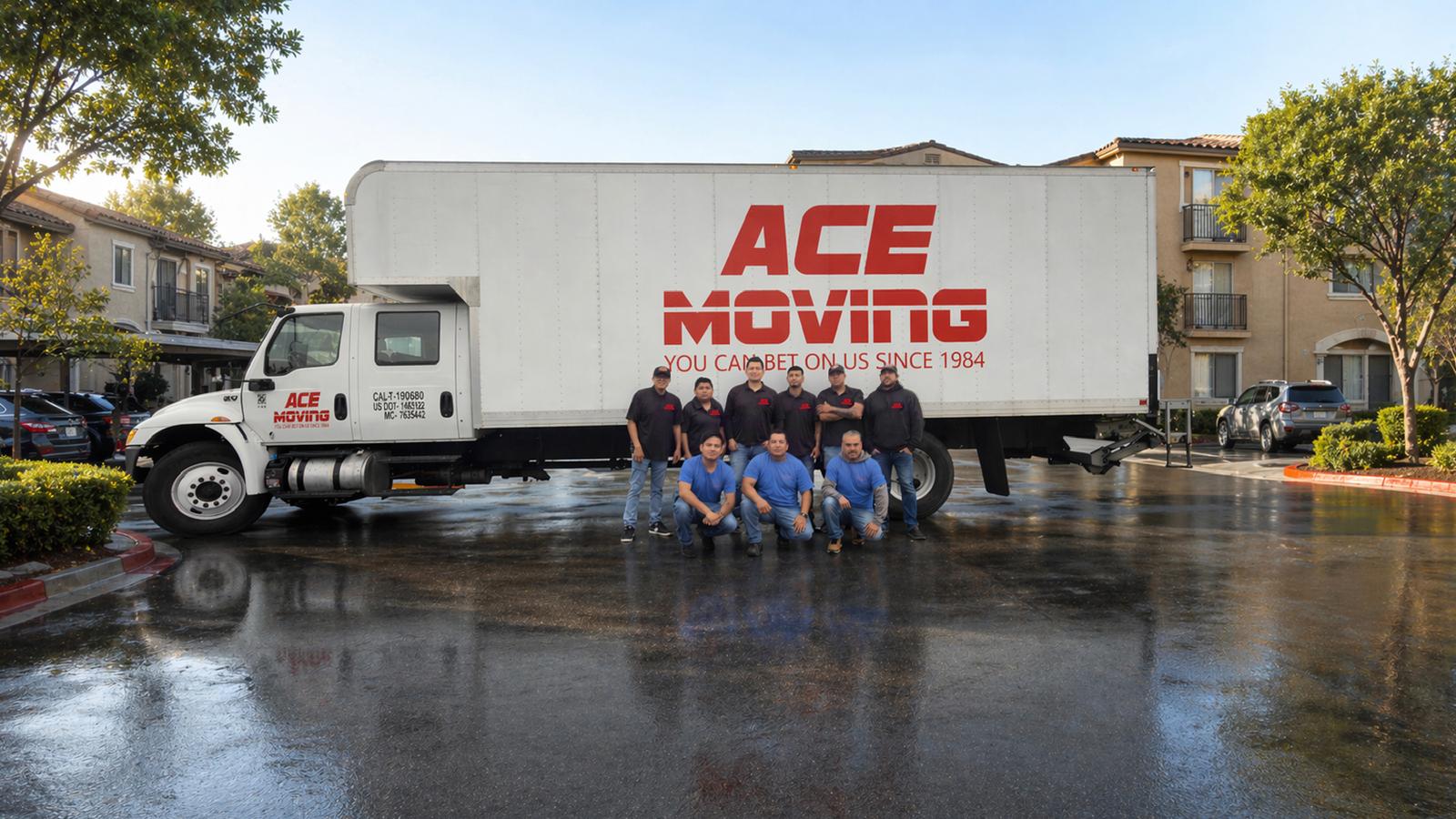
Ace Moving Co. has served Bay Area customers since 1984 and publicly shares trust signals including a 5.0 Google rating with 269 reviews, a 4.9 Yelp rating with 274 reviews, an A+ BBB rating, and more than 40 years of moving experience.
What To Do if You Think Movers Are Scamming You
- Document everything with photos and video.
- Save all paperwork, estimates, receipts, and messages.
- Record truck numbers and license plates.
- Contact local law enforcement if belongings are being withheld.
- File complaints with FMCSA and California household goods regulators.
- Use a credit card whenever possible to preserve dispute options.
Frequently Asked Questions
How do I know if a Bay Area mover is legitimate?
Verify licensing, insurance, physical business addresses, review history, and written estimates. Legitimate movers should willingly explain pricing and provide documentation before moving day.
Is it illegal for movers to hold belongings hostage?
Yes. Interstate moving companies cannot legally withhold shipments to force customers into paying dramatically inflated charges beyond applicable estimate rules.
Why are moving scams common in the Bay Area?
The Bay Area has high relocation activity because of tech jobs, housing costs, apartment turnover, and interstate migration. That volume creates opportunities for dishonest operators targeting rushed customers.
What is one of the biggest moving scam warning signs?
One of the biggest warning signs is pricing that is dramatically lower than every other estimate combined with pressure to book immediately or pay a large upfront deposit.